Thoughts on Conversation as Art as Learning Activity

*

“There’s no doubt in my mind that collaboration, diversity, the exchange of ideas, and building on other people’s achievements are at the heart of the creative process.” – Sir Ken Robinson


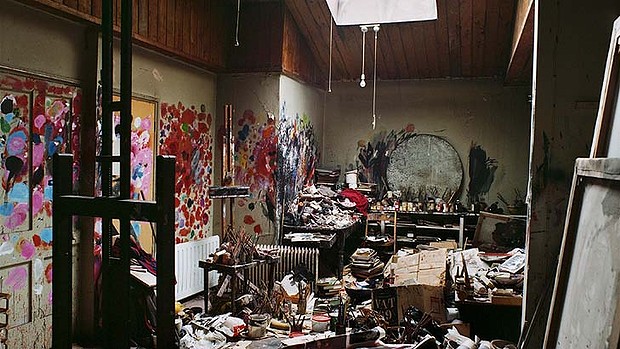
It is no great surprise to anyone who knows me to any degree that I believe in process, the beautiful messiness of the creative act. I believe the process associated with the creative act in all of its forms requires a deep commitment to searching, to diving into the deep end, without complete understanding of what we’ll find there. I can remember viewing photos of Francis Bacon’s studio, walls covered in strokes of paint and chaos in physical form. This image of creativity was profoundly visceral for me, exciting and a little scary. I remember it accompanied a set of profound interviews with David Sylvester (a video example of one of these interviews can be viewed here). Note that Bacon explains that he doesn’t know what he’s doing, he doesn’t have any story to tell.
Creativity that is truly about learning (learning about ourselves, our past, our future, each other) is always an unknown venture, one rife with much failure and lack of comfort. However, it is worth the risk of failure to discover and gain new knowledge. In my experience, art and education are two of the most direct methods for almost immediate access to the creative act of learning through the search itself. Both art and education can be viewed as conversations, either synchronous or asynchronous communication that is reciprocal in nature.

Art and education are forms of conversation in which the full potential of the creative act (or its initial creation) can only be experienced with the participation of the other. Whether the conversation is happening simultaneously (as in most classrooms or innovative online degree programs) or with the past (as in Adrienne Rich’s beautifully descriptive “Diving into the Wreck”), it must always include more than the lone individual (even if the other is experienced in mind/imagination only).

One example of dialogue with the audience of the imagination is Seamus Heaney’s “Digging”, a poem that describes his own connection to the past (and his lineage) and how writing poetry is similar to working in the soil to provide future nourishment. In this short work, we understand that Heaney is in dialogue with the past and present, family and himself. Martin Buber, in his philosophical work I and Thou, explains that humans define the world through our interactions with the other. These interactions can take place regardless of time and place. Heaney’s work is locked squarely in direct dialogue with memory, self-reflection, and his role in the patrilineality of his family.

Marcel Duchamp claimed that without the viewer/participant, the artistic act is stillborn and never really complete (Maria Popova shares this in her amazing blog, Brain Pickings, here). This really connects with me as a teacher. Teaching is a dynamic, ever-evolving act of creativity, a beautiful conversation (Tricia Whenham describes this very well on her blog).

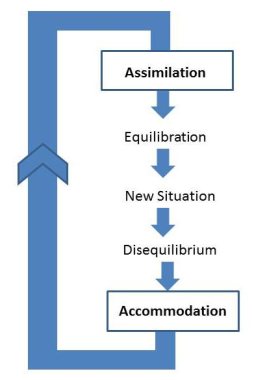
Art is difficult. Real conversation is difficult. Learning makes us uncomfortable. There are reasons for this (not the least of which includes Piaget’s concept of equilibration). When we are in situations wherein we encounter something new, perhaps even unpredictable, we can become emotional. According to the concept of equilibration, we are having to cognitively accomodate for new information and assimilate within our existing schema (or our knowledge map of the world).
 

Conversation is one of the most basic creative acts. However, the act of real conversation may not be long for this world, if we believe the statistics collected by the Pew Research Center (2015) regarding the prevalence of cellphone usage in social settings. Teachers and artists must create the conversational act, must shape it to help generate deep thinking and self-reflection.

I have discussed the importance of creativity, conversation as pedagogical framework, and the impact of engaging learning experiences for months now. Even this is a process for me. Conversation is that important as a transformative activity. It is a contract with the unknown, the improvisational, and it is essential to understanding.

We Need Weapons of Compassion and Insight: A Brief Note on Love, Education, and Dialogue

*

It’s easy to misinterpret thoughts, acts, and beliefs that originate in fear as freedom; to do so is normal as we emotionally and cognitively mature. Dorothy Day warned that even when we believe we are headed in the right direction, we must continue to resolutely question our actions and motivations and those of others. She explains that many tyrannical leaders “were animated by the love of brother and this we must believe though their ends meant the seizure of power, and the building of mighty armies, the compulsion of concentration camps, the forced labor and torture and killing of tens of thousands, even millions” (1951).

To challenge ourselves to interrogate our beliefs and thinking requires real courage and a willingness to understand one another. The courage to investigate our beliefs and the world demands that we enter into dialogue with others. This dialogue may take the form of real-time discussions or engagement with the past (i.e., cultural artifacts). This dialogue, an act of learning through the co-construction of knowledge, is absolutely necessary to deeper learning and commitment to others. Paulo Freire refers to this act as an “existential necessity” that is founded on love (Pedagogy of the Oppressed, 1970, p. 89-90).

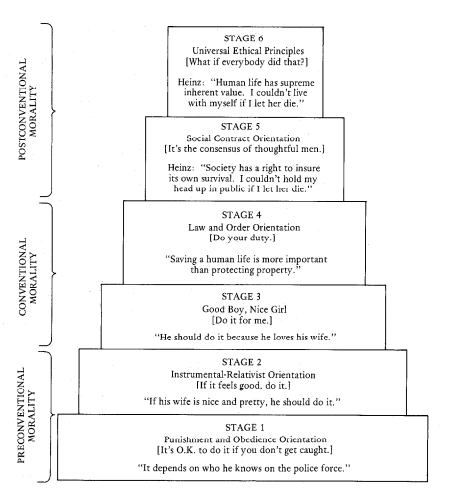
I believe that the recognition of love is synonymous with the evolution of our morality and capacity for understanding the complexity of the human experience both individually and as a species. Love, in other words, is education. Education is synonymous with love. Humility and the desire to learn are required for the acceptance of new understanding. Education, bell hooks declares, is “very much an act of love in that sense of love as something that promotes our spiritual and mental growth” (2004).

Kohlberg_Model_of_Moral_Development

Kohlberg’s Stages of Moral Development, Public Domain

Cultivating our ability to move from an outlook based on fear to one founded on love is most likely the greatest and most courageous achievement. It is not an easy task to move to love. It is moving to the unknown, and this can disrupt our equilibrium and shake our existing individual schema of the world (Piaget, 1928).

This shift to the unknown (uncomfortable) is necessary for learning to take place, but it’s not easy. This shift to love, to the unknown, provides the opportunity for us to view the “fully present” world, and we can no longer afford not to accept responsibility for it (Martin Buber, 1937, p. 82). To love this way, with complete attention to learning and growing unexpectedly, is challenging. Attention of this sort, according to Simone Weil, is prayer (Gravity and Grace, 1952).

We must remind ourselves daily to attend to love, to seek learning, to allow ourselves dialogue with one another.


tumblr_mx8hdv7j7x1qkycy7o1_1280

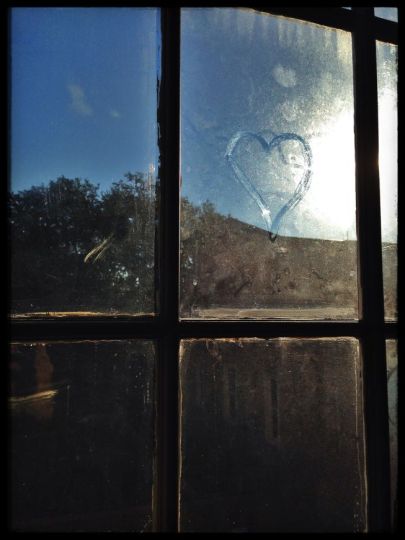
Window at Norman Hall, University of Florida College of Education (2013)

Links to Further Reading

Note: The title of this post is a partial quote from bell hooks’ Outlaw Culture: Resisting Representations (2006)

Rough Notes on Art as Vital Learning Activity in Early Childhood

*

The deep link between creativity and education, although universally acknowledged in recent educational literature, was not always accepted as axiom.  The idea of creativity as an indicator of cognitive and emotional growth in the early education of children (as established in educational research) did not really catch on until the 20th Century.

Recently, I have been revisiting works about early childhood development and observed growth/development found in creative output. Further inspired by the work of Brosterman on the origins of kindergarten and Fröbel’s gifts, I have started keeping personal notes around the subject of early childhood and creativity as a vital learning activity. It seems as though Fröbel arrived at the notion of fostering the creative instinct as pedagogy first, because pedagogical research for the early 1800s isn’t exactly easy to find.

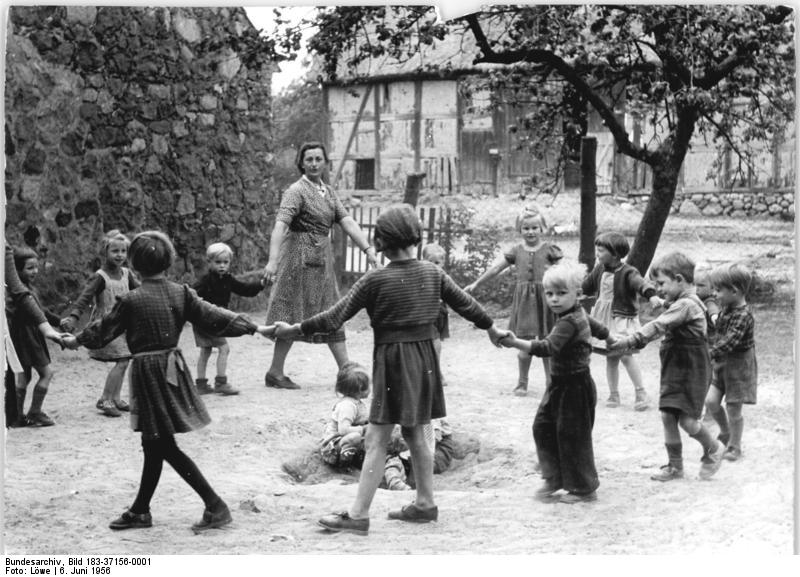
Beentz, Erntekindergartengruppe

Although one can easily locate Vygotsky’s The Psychology of Art, the work isn’t strictly about early learning, early childhood, pedagogical practice, or creative development outside of interpretation of artistic works. However, Vygotsky does discuss art as educational tool. In the introduction to one of the later chapters, he explains that “art has always been regarded as a means of education, that is, as a long-range program for changing our behavior and our organism…the significance of applied arts, involves the educational effect of art. Those who see a relationship between pedagogy and art find their view unexpectedly supported by psychological analysis” (Vygotsky, 1925).

Vygotsky is respectful of the work of others in the domain of teaching research. He shares that “we must take into account the specific peculiarities facing one who deals with children. Of course this is a separate field, a separate and independent study, because the domain of child art and the response of children to art is completely different…There are remarkable phenomena in the art of children” (Vygotsky, 1925).

IMG_2607

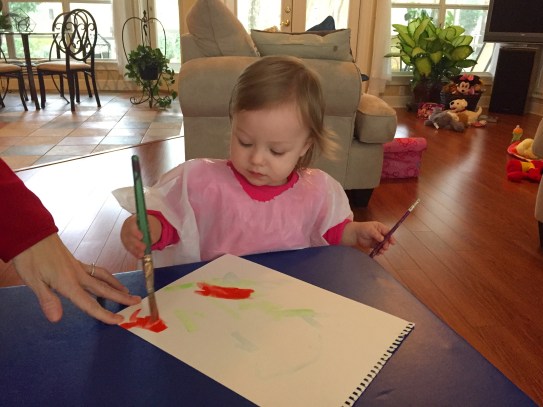
Eleanor paints a picture (2015)

Although Vygotsky’s book dealt with some of these ideas at a superficial level with regard to early childhood, the work of Dewey and Piaget extended the idea of art as an experience associated with learning. Dewey was driven to promote the link of experience to learning (art being only one of the ways to engage in that experiential learning), and Piaget (and Inhelder) were observing the behavior of children to possibly gain insight into their cognitive development. The interpretation of childhood drawings can yield artifacts of psyhological and cognitive development. But, does one get a true picture of what is happening in the interior of the child’s thought?

Harriman and Zernich (1980) suggest that Piaget’s Cognitive-Structuralist Theory (and his own descriptive examples of a child’s cognitive development and response to increasingly abstract phenomena) can be observed in the artistic growth of children and that this increased complexity of thought and interpretation reveals a broader cognitive development at work. The limitations of this work are obvious considering the nature of the data collection and research: only observed actions were used to perceive possible changes in growth. The perception and creative output of children provides another, richer view of their experience and cognitive and emotional development.

FullSizeRender(1)

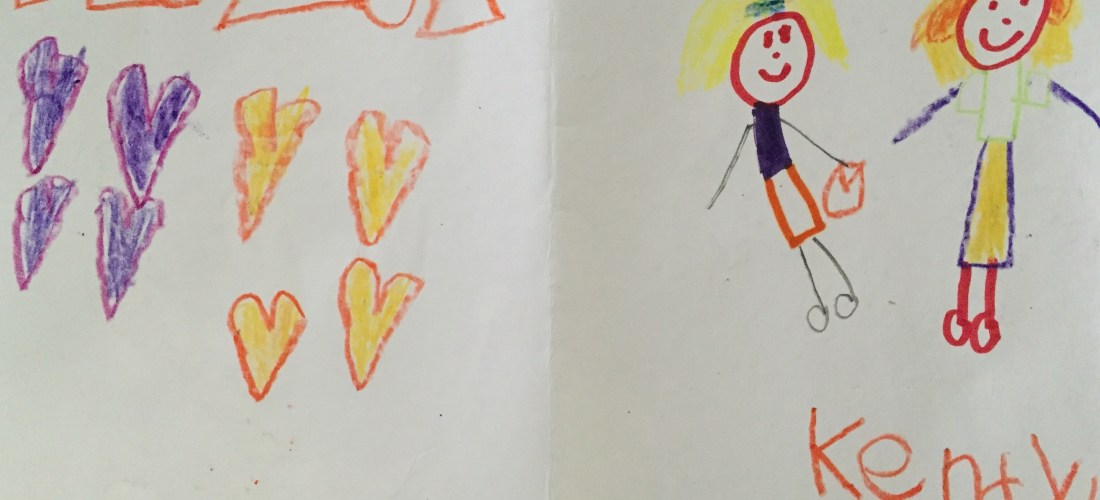
Pre Kindergarten student draws me and the class (1995)

Taking account of the unique phenomenological experience of children for the purpose of understanding their cognitive and emotional development was really highlighted by Maurice Merleau-Ponty, the philosopher that occupied Piaget’s former chair at the Sorbonne, where he lectured on child psychology and education from 1949-1952. Although Merleau-Ponty was well-known in the areas of aesthetics and phenomenology, this period of his writing provides a great bridge between art, psychology, philosophy, and early childhood.

Merleau-Ponty built on Vygotsky’s (pre-Existentialism!) idea that learning is experienced through the body, not just the mind. His work of this period seems to echo Vygotsky’s idea that “art performs with our bodies and through our bodies” (1925). In this way, experience is surely unique for every person. Even if an experience is shared, our own interpretations of it and the implications of its assimilation may be vastly different from one person to another. This complicates pedagogy. It is the basis for the differentiation of instruction.

What does this mean for art as a tool in today’s early childhood centers or elementary schools with which to engage learners individually? It seems Fröbel was tapping into something which we now better understand. However, where is art education today? Is it soley a piece of our pre-kindergarten experiences, never to be addressed in middle or later childhood?

Experience and cognition are not separate activities, and every one of these thinkers mentioned understood that to some degree. Early childhood seems to be one of those areas that we don’t really completely understand. There is no formula for educating all children, because each child uniquely experiences the world.


References

Dewey, J. (1934). Art as experience

Hardiman, G., & Zernich, T. (1980). Some considerations of Piaget’s Cognitive-Structuralist Theory and children’s artistic development. Studies in Art Education, 21(3), 12-19. doi:1. Retrieved from http://www.jstor.org/stable/1319789

Vygotsky, L. (1925). The psychology of art

Merleau-Ponty, M. (2010) Child psychology and pedagogy: The Sorbonne lectures 1949-1952

Piaget, J. & Inhelder, B. (1956). The child’s conception of space.

Draft of Conference Proposal on Video-based Learning for Instructional Improvement

*

Conference Session Proposal Draft

Title: Enhancing Teacher Preparation Online through Video-based Modeling and Feedback

Abstract:

Although video of teaching practice has long been a part of the national discussion concerning teacher observation and evaluation (i.e., TIMSS 1999 Video Study), online video-based pedagogical practice has only recently been acknowledged in the research literature as a cornerstone for effective online and face-to-face teacher preparation and continued professional development (i.e., Archer, Cantrell, Holtzman, Joe, Tocci, & Wood, 2016; Borko, Koellner, Jacobs, & Seago, 2011; Derry, Sherin, & Sherin, 2015; Gaudin & Chaliès, 2015).

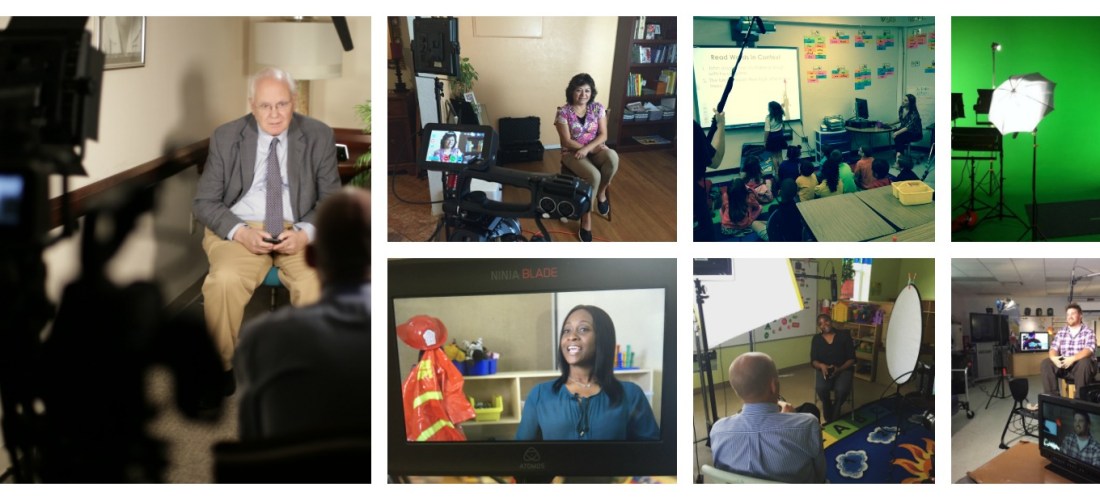
The University of Florida College of Education faculty and staff have unique expertise in planning and implementing innovative online video-based pedagogy for the purpose of improving teacher and leader preparation and professional development. Motivation of online students played a key factor in the initial decisions to redesign coursework to include professional video in addition to synchronous observation video software (i.e., Guo, Kim, & Rubin, 2014). Some examples of our efforts include the implementation of synchronous and asynchronous video solutions (with annotation) for teacher observation and pre-service mentoring, embedded video of UF graduates modeling teaching best practices within our online courses, expert and practitioner interviews and case studies woven through online discussions, and targeted video demonstrations of instructional strategies for teaching students with dyslexia.

In this session, the demonstration and effectiveness of these design changes will be discussed, including the sharing of student feedback regarding how these changes have impacted their instruction in the field.

References

Archer, J., Cantrell, S., Holtzman, S. L., Joe, J. N., Tocci, C. M., & Wood, J. (2016). Better feedback for better learning: A practical guide to improving classroom observations. Jossey-Bass: San Francisco, CA.

Borko, H., Koellner, K., Jacobs, J., & Seago, N. (2011). Using video representations of teaching in practice-based professional development programs. ZDM Mathematics Education, 43, 175-187.

Derry , S., Sherin , M., & Sherin , B. (2014). Multimedia learning with video. In R. Mayer (Ed.), Cambridge handbook of multimedia learning (pp. 785–812). New York: Cambridge University Press.

Gaudin, C. & Chaliès, S. (2015). Video viewing in teacher education and professional development: A literature review. Educational Research Review, 16, (41-67)

Guo, P. J., Kim, J., & Rubin, R. (2014). How video production affects student engagement: An empirical study of MOOC videos. Paper presented at Learning @ Scale 2014 Annual Conference, Atlanta, GA.

 More at- https://www.academia.edu/25847583/Enhancing_Teacher_Preparation_Online_through_Video-based_Modeling_and_Feedback