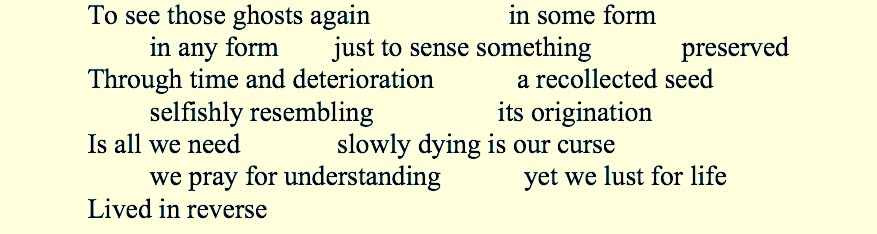
This small piece – I liked it.
Just a fragment, but it was my favorite part.
This small piece – I liked it.
Just a fragment, but it was my favorite part.
Why make art? Why write or photograph or paint anything?
“If you can take that first step toward communication, toward understanding, toward love, then no matter how difficult the future may be- and have no illusions, even with all the love in the world, living can be hellishly difficult- then, you are saved. This is all that really matters, isn’t it?” – Ingmar Bergman, 1964

Winter blue and brown

Last night, the sky painted itself electric.
UPCOMING PUBLICATIONS, 2014
“Revisionism” at 5/Quarterly’s Tumblr in Spring 2014
“Wetlands” at Convergence: An Online Journal of Poetry and Art (Spring/Summer’14)
RECENTLY PUBLISHED POEMS, 2012-2013
“Occupation” at Convergence: An Online Journal of Poetry and Art
“Broken Consort” & “Silent Black Song” at Icebox Journal
“Amplifier” at NNATAN
Three Poems at Iridum Sound’s Churn Thy Butter
“Haunting” at Yorick Magazine, Summer/Fall 2013 Issue
RELATED
Painting and Process (short interview) at Draft Journal, 2013

Our beautiful girls. @annamaria0717
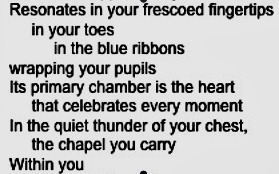
Piece of a poem I wrote to Anna in April, 2011.
Dorothea Lasky is a force for creativity.
Her poems burst with color and neccessity. Her short lines are full of fire. Earth, water, and wind are present in her most recent book, but there is much fire.
Not only a respected and established poet (her books- Awe, Black Life, and Thunderbird- can all be purchased at Wave Poetry), Dr. Lasky examines the role of creativity in learning. Her dissertation, her articles for academic journals, and her class syllabi all reflect this deep passion for the creative act. She creates spaces in her writing and her teaching that allow others to experience the power of the imagination and the possibility of experiencing something transcendent.
But, you can read for yourself.
Here is a small list of some of her articles, interviews, and her book on poetry in education:
Could Poetry Start an Educational Revolution?
Open the Door: How to Excite Young People About Poetry
Making Space for the Act of Making: Creativity in the Engineering Design Classroom

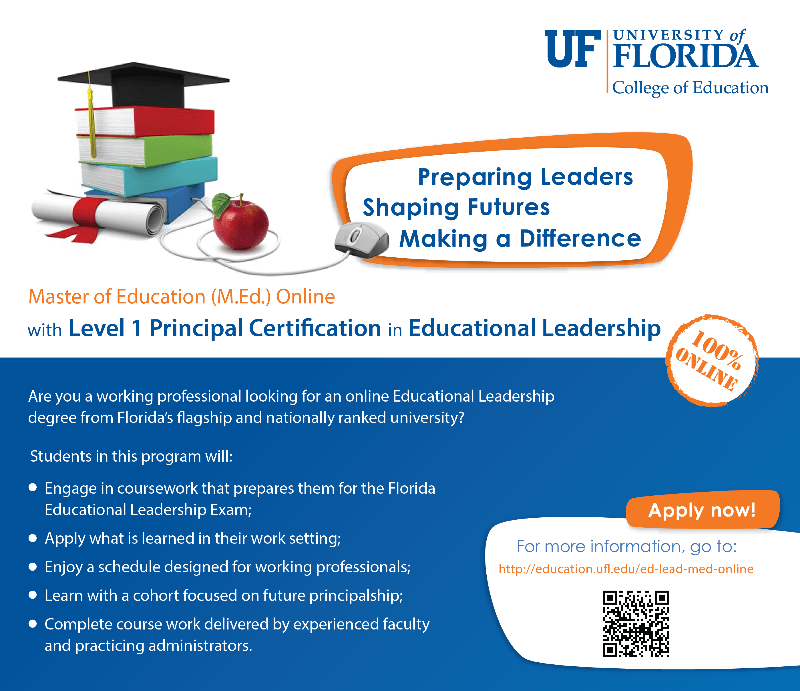
The Educational Leadership Program Area of the College of Education at the University of Florida is pleased to announce an opportunity for persons who are interested in obtaining a master’s degree with Level 1
Florida principal certification. This program from the nationallyrecognized UF Educational Leadership program is totally online and designed for working professionals. It leads to a M.Ed. and Level 1 principal certification. This program is a tremendous opportunity forpersons in your school district to further their own professional goals while the district benefits by having highly trained candidates for administrative positions.
Please review the attached flyer below and also please forward this message to the person in your district responsible for professional development and to any professionals who would be interested in obtaining a M.Ed. with certification.
Further details about the program are available at
http://education.ufl.edu/educational-leadership/online-degrees/edlead-med/
or by contacting the program coordinator,
Dr. Bruce Mousa at bmousa@ufl.edu.

Red red bells



2010
Standardized Tests don’t Equate to Stronger Cognition
“In a study of nearly 1,400 eighth-graders in the Boston public school system, the researchers found that some schools have successfully raised their students’ scores on the Massachusetts Comprehensive Assessment System (MCAS). However, those schools had almost no effect on students’ performance on tests of fluid intelligence skills, such as working memory capacity, speed of information processing, and ability to solve abstract problems.”
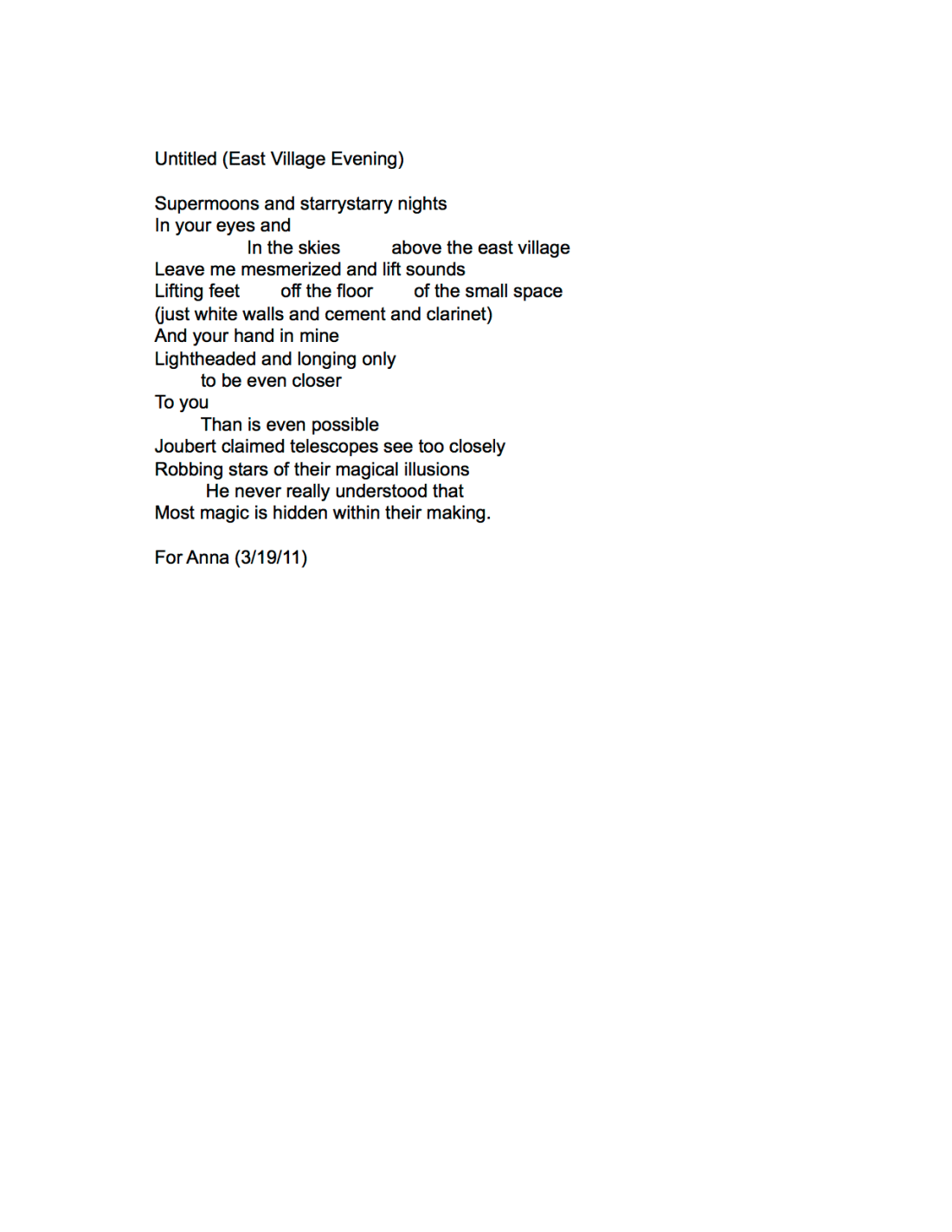
This poem was written after a concert at the Stone during our honeymoon. We had taken a cab back to midtown, and there was a “supermoon” that evening. I was reading Paul Auster’s translations of Joubert’s writing at this time. The performers at the Stone were Ken Vandermark and Joe McPhee on clarinets, saxophones, and pocket trumpet. Later, she purchased the photographs of the event from Peter Gannushkin (http://blog.sonicbeet.com/ & http://www.linkedin.com/in/gannushkin), an amazing photographer who captures the music and the personalities of the evening perfectly.
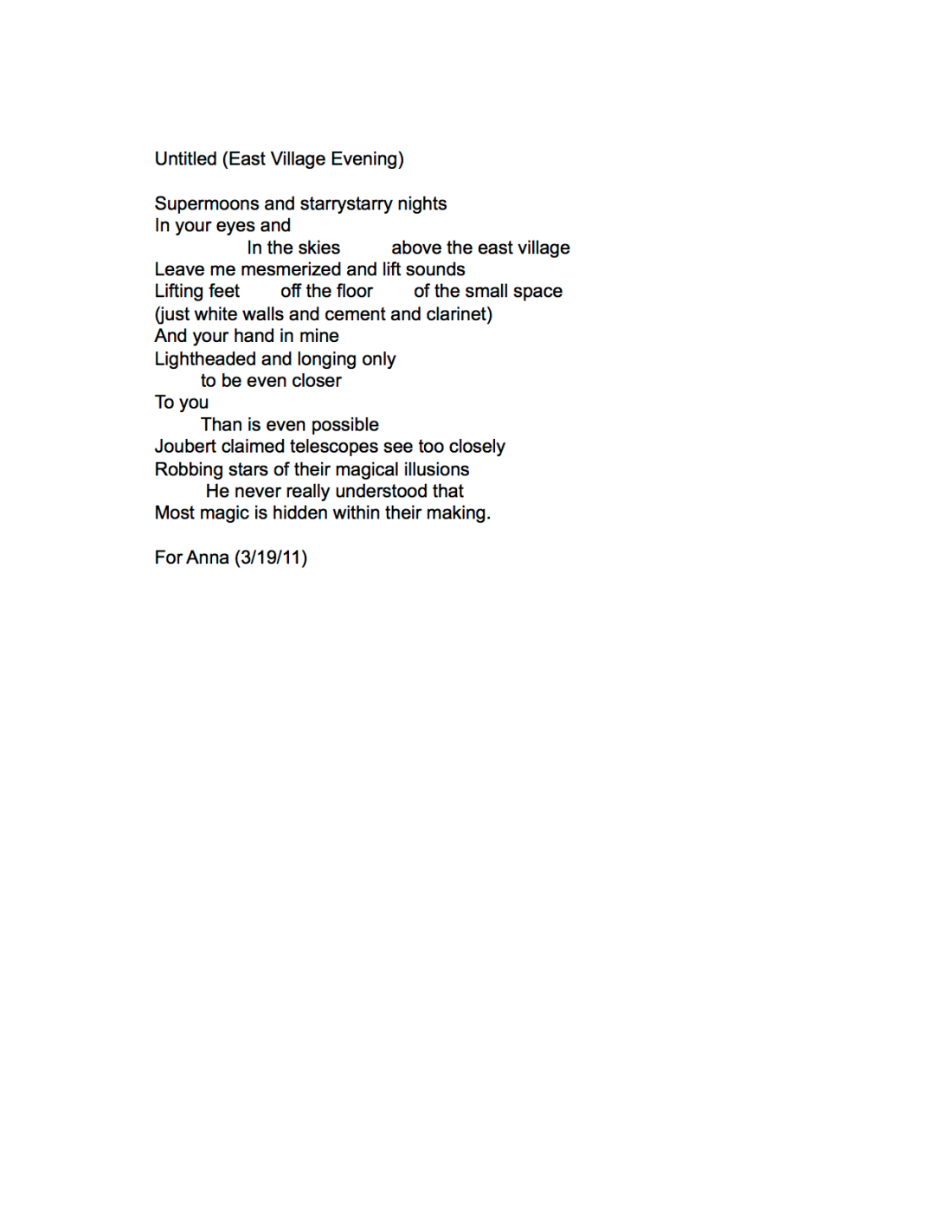
This poem was written after a concert at the Stone during our honeymoon. We had taken a cab back to midtown, and there was a “supermoon” that evening. I was reading Paul Auster’s translations of Joubert’s writing at this time. The performers at the Stone were Ken Vandermark and Joe McPhee on clarinets, saxophones, and pocket trumpet. Later, she purchased the photographs of the event from Peter Gannushkin (http://blog.sonicbeet.com/ & http://www.linkedin.com/in/gannushkin), an amazing photographer who captures the music and the personalities of the evening perfectly.

Holiday party for the College of Education. Photo booth was there. So were the spirits.
Thoughts about teaching and learning:
Multi-tier System of Supports for Learning
After teaching in the elementary and high school environments, teaching and creating learning activities online, and spending time teaching adults and pre-K students to read, I have come to reflect on some things regarding instruction and learning. I will start to keep some posts geared toward these ideas. This reflection, which may be insane and unfounded, has to do with differentiation.
The only “solutions” to the Two-Sigma Problem addressed in Bloom’s research and subsequent articles (listed below) include:
1. Effective teaching/facilitation of learning- There are no magic bullets here. A teacher who knows their students (whether online or face-to-face) and can motivate them, stimulate curiosity, and build their students’ self-efficacy will have a better chance of creating lifelong learners. The differentiation of instruction and the providing of supports for all learners can be called many things. It is referred to as RTI, MTSS, and many more names/acronyms. However, it doesn’t matter what it’s called…one-to-one tutoring is a conversation wherein a student is constantly engaged in a learning discussion. In small groups, targeted to need, the students are reinforcing one another’s learning through the social action that’s taking place. In the whole class/group, teachers must be aware of various indicators of learning from individual learners. The class must be held as a learning community, not unlike Socratic seminars or problem-based learning activities. In these situations, learners are engaged, motivated, and supported by the teacher and other students.
http://www.rtinetwork.org/learn/what/whatisrti
2. Online education with adaptive software only fulfills part of the need of most learners. Most learners need more than a Storyline-based online course wherein they are constantly “moved” back or forward in an online environment based on responses to questions/formative assessments. There needs to be opportunity to discuss, to reflect on learning…to bounce ideas off other learners. Facilitation does this, some online social networking does this, and even forums do this. But, online instruction that is not facilitated can only work with adult learners who are engaged with a learning activity due to a requirement (traffic school) or a personal need (getting a certification for work or to open up opportunities outside of a person’s current situation). This is not stated as clearly as I’d like to state it…but, curiosity and community can’t be forced. There has to be a relationship to the learning.
3. Finally- adults only learn what they find value in learning. Perception of value is the key…more on that later.
Bloom’s Two-Sigma Problem (1984) links:
These notes make little sense out of context. However, I save almost everything that I write or think about in writing. These wqere some notes (with lots of attached digital studies to back up my thoughts) in 2010-2011. I originally kept track of all of this, because I was trying to figure out the best way to explain solid course design from the perspective of UI/UX commonly associated with social media and gaming. That was pretty much a failure, but I was able to plant the germ of thought around these concepts with several individuals who had never thought about the motivational or social constructivism that should be a part of learning online (the same way these play such a vital role in face-to-face instruction). When I write things down, I tend to really remember them, even if I don’t return to the notes. Each of the studies or books contained in the notes have been read and considered prior to adding them to my thought process.
“Learning guides” and personal touch in online learning experiences:
Research behind “Learning Guides” showing up to talk to the learner at least five times during a lesson (Big Ideas, etc.)
Important to remember-
Wang, N., Johnson, W.L., Mayer, R.E., Rizzo, P., Shaw, E., & Collins, H. (2008). The politeness effect: Pedagogical agents and learning outcomes. International Journal of Human Computer Studies, 66, 98–112.
Mayer, R.E. (2005). Principles based on social cues: Personalization, voice, and image principles. In R.E. Mayer (Ed.), The Cambridge handbook of multimedia learning (pp. 201–212). New York: Cambridge University Press.
Moreno, R., Mayer, R.E., Spires, H., & Lester, J. (2001). The case for social agency in computer-based teaching: Do students learn more deeply when they interact with animated pedagogical agents? Cognition and Instruction, 19, 177–214.
Component 1: Multimedia Approach (illustrations over text, spken text or narration over printed text only)-
1. Seminal 2007 Study Link- http://www.scribd.com/doc/33972230/Richard-E-Mayer-Applying-the-Science-of-…
2. Novice-level users of technology and multimedia – attached below
3. Last text and cover attachments include a short couple of pages from e-Learning and the Science of Instruction: Proven Guidelines for Consumers and Designers of Multimedia Learning [Ruth C. Clark, Richard E. Mayer]- Breaking all sorts of copyright rules here…(and this is not a part of our coursework here in ID…but, this is an important book synthesizing these ideas and used at other state universities, like USF and UCF).
Responsive Design and User Interfaces
1. Examples and clear definitions of adaptive/responsive web development templates:
a. A List Apart (One of my favorite web blogs for design- definition of this component…Link)- http://www.alistapart.com/articles/responsive-web-design/
b. Examples using Goldilocks (attached below)
c. These things can be templates for further work-
http://designshack.net/articles/css/5-really-useful-responsive-web-design-p…
d. Defined through image (attached below)
e. Excellent example of a website (other than Boston Globe, which is brilliant) that “knows” what you are viewing it on- www.thinkvitamin.com
f. What I am using for UI wireframing and basic design- Keynote Kung-Fu and hotglue.me
2. Examples of Cascading Style Sheets (CSS)…specifically for CSS3:
a. Really cool (examples of how content can live in a variety of amazing style sheets using CSS3)- www.csszengarden.com
b. http://demo.marcofolio.net/3d_animation_css3/
c. http://filamentgroup.com/lab/responsive_images_experimenting_with_context_a…
d. When can I use specific things????- http://caniuse.com/
3. Jason’s favorite UX/UI designer:
http://jamesadame.com/50769/453451/gallery/dunkin-donuts
More information-
Why it’s important and what it looks like-
http://uxmag.com/articles/designing-for-context-the-multiscreen-ecosystem#.…
The Designer’s Rise to Upper Echelons of Business Community-
http://www.huffingtonpost.co.uk/mark-c-curtis/the-designers-rise-into-t_b_1…
Really great, innovative design takes lots of work. Simplicity is so complex. These guys rock at it.
And, when you just want to get “cool”-
http://mrdoob.com/137/Voxels_liquid
Badging:
Social networking can be leveraged as a tool to promote deep communication and learning between learners and as a way to validate accomplishments of those learners. Badging and the curating of shared knowledge within this network (participants’ shared knowledge may be examples of lesson plans, videos, blogs, photos from the field, etc.) is a powerful way to building a structure that allows for meaningful learning in an online environment. This shared responsibility for curating the uploaded artifacts helps to motivate the learner and can be used to help assess the contributions and the outcomes of applied learning for every participant.
I have attached Baker’s 2007 AERA published paper as the “touchstone” document from which a great deal of research has been based.
Ease of Use:
IMPORTANT STUDY (as important as Roger’s book, Diffusion of Innovations, IMO):
Davis, F. D. 1989. Perceived usefulness, perceived ease of use, and user acceptance of information technology. MIS Quarterly 13( 3): 319– 340. (attached)
Rogers, Everett M. 1962. Diffusion of Innovations. Glencoe: Free Press. Most recently revised 2003 (5th edition).
and, just because I like these books, and I’ve found them to contain a lot of truth:
Malcolm Gladwell’s Tipping Point (1st chapter attached)
http://www.gladwell.com/tippingpoint/
Norman’s The Design of Everyday Things
http://en.wikipedia.org/wiki/The_Design_of_Everyday_Things
Learning activities:

What was left.

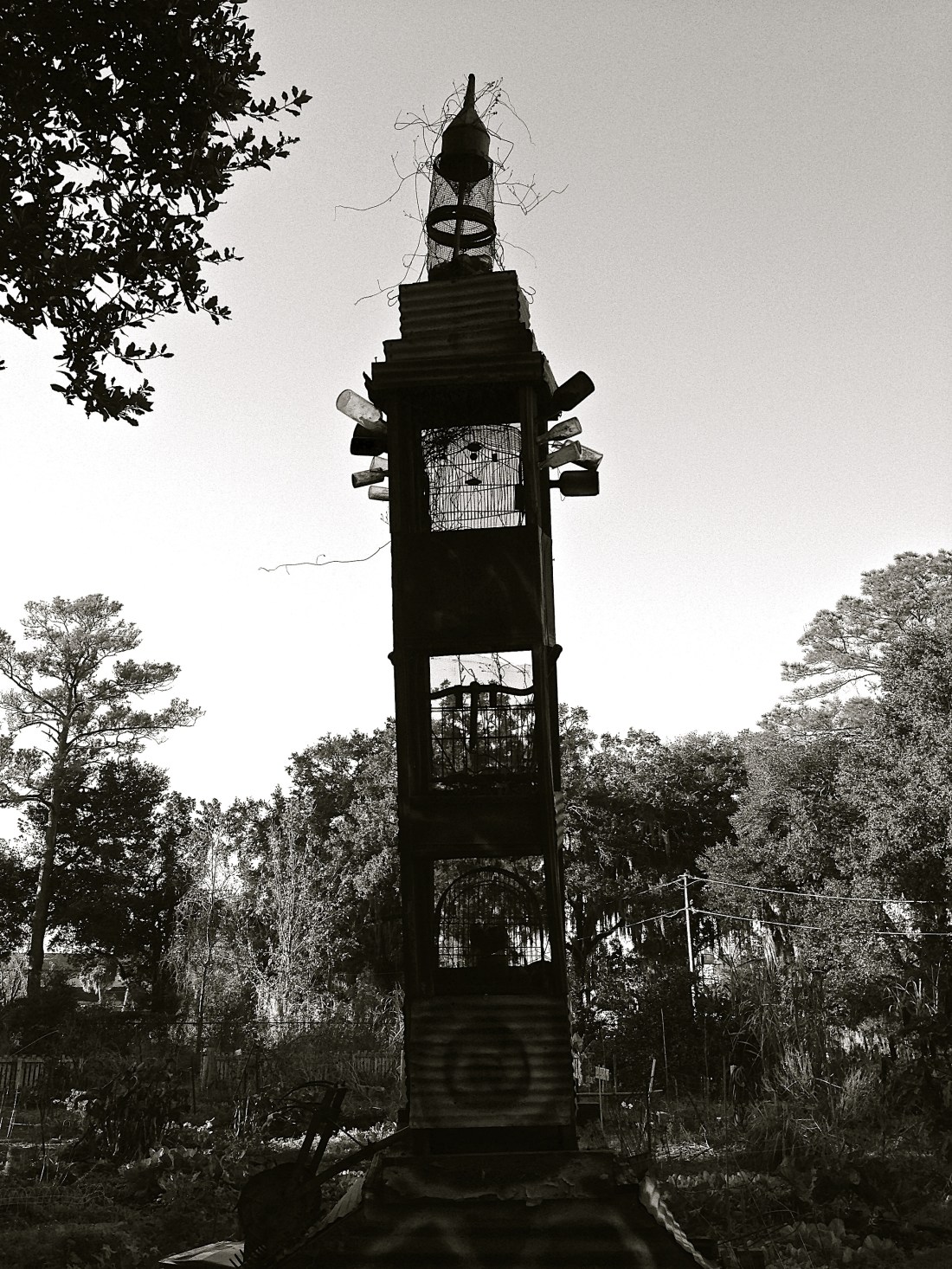
December 11, 2013
Morning drive 1
 Dr. Jason Dean Arnold